Celebrating America's 250th Birthday: Keeping Our Dogs Safe This Fourth of July
The Fourth of July is one of those holidays that feels like summer in full swing. The grill is going, friends and family are gathering, food is everywhere, and fireworks light up the night.
However, for our dogs, the holiday can feel very different.
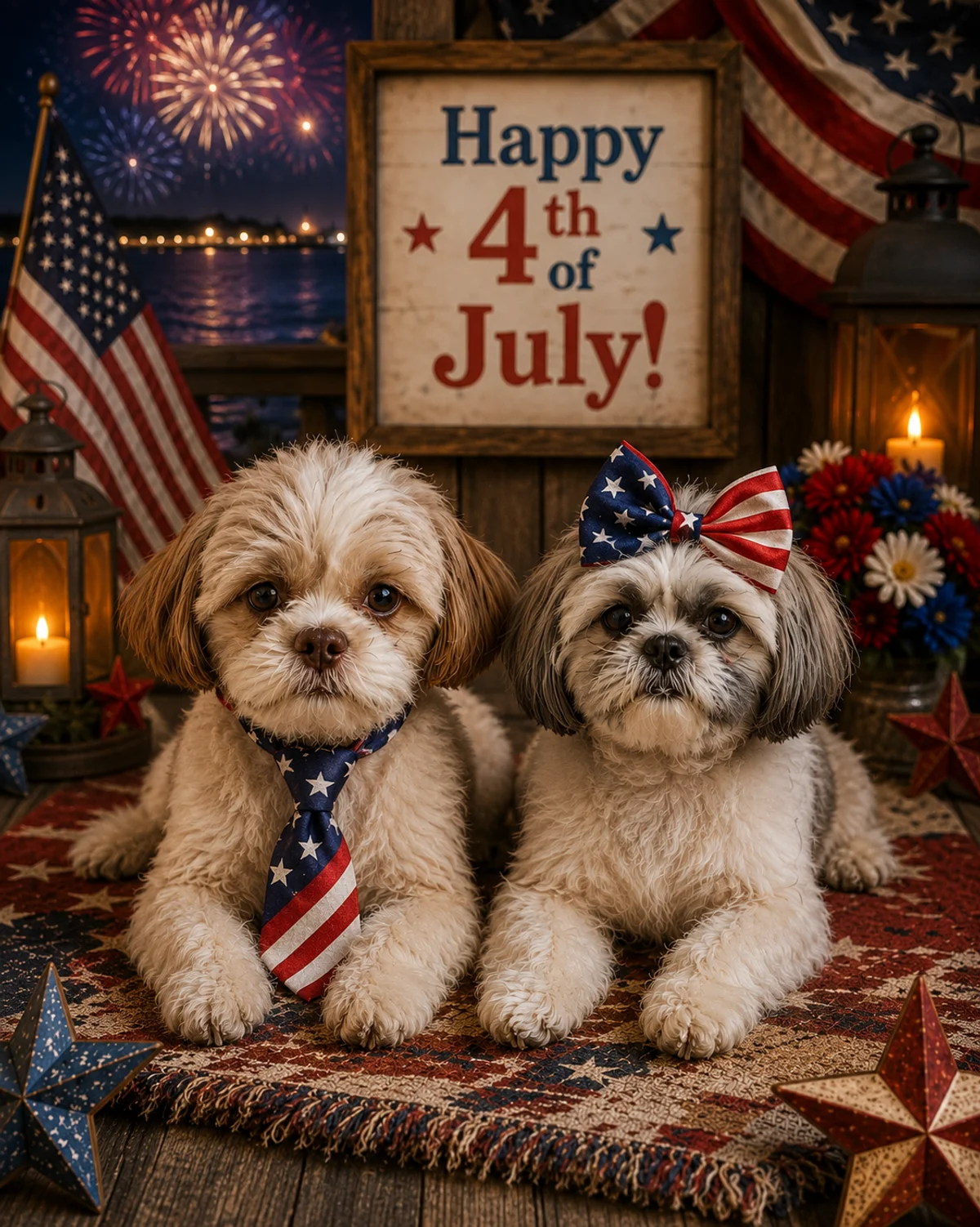
What we see as a fun celebration can quickly become overwhelming or dangerous for them. Loud fireworks, unfamiliar people entering and leaving the house, open doors, food within reach, and a change in routine create the perfect storm for stress and accidents. That’s why it’s important to remember that our dogs rely on us to make good choices for them, even if that means they can’t join every celebration.
Fireworks Are More Than Just Loud
We may know a boom is coming. Our dogs don’t. Fireworks can trigger fear and panic, and a frightened dog may try to escape through a door, jump a fence, pull out of a collar, or hide somewhere unexpected. The American Veterinary Medical Association puts the holiday risk into perspective with one simple reminder:
“Noisy fireworks and other celebrations can startle animals and cause them to run away.” That warning from the American Veterinary Medical Association’s July 4 safety guidance is important. They also remind pet owners that holiday foods can be unhealthy and that other seasonal risks can make the celebration dangerous for pets.
Set up a quiet spot indoors for your dog before the fireworks start. Close the blinds and turn on the TV, music, a fan, or white noise to help block out the sounds. Put their bed, favorite blanket, toys, and anything else familiar in the space to help them feel safe.
And please, don’t take your dog to a fireworks display. They do not need a front-row seat.
The Fear Is Bigger Than We Realize
We often underestimate fireworks because we experience them differently. We know what’s happening and why the sky is full of lights and noise, but our dogs don’t understand any of it. The American Kennel Club recently addressed this in its Fourth of July dog-safety guidance. Certified behaviorist and dog trainer Russ Hartstein explained: “Some tolerate it, but Fourth of July can be a traumatic experience for them.”
If your dog is pacing, panting, trembling, drooling, hiding, whining, or sticking close to you, they’re not being dramatic. They might really be struggling with all the noise and chaos. The American Kennel Club suggests making a safe indoor space for your dog, away from doors and windows. If your dog needs to go outside, even in your own yard, keep them on a leash because a sudden firework could make them run off.
The Food Table Is Not a Dog Buffet
Fourth of July food is part of the fun, but it can also be one of the biggest hazards for dogs.
At a busy cookout, it’s easy to lose track of who is feeding what. One person slips the dog a bite of burger, another offers a piece of hot dog, a child drops food on the ground, and a guest leaves a plate unattended. Before long, your dog may have eaten far more than anyone realizes.
Food is not the only thing curious dogs may try to eat. The ASPCA issued a warning because every dog owner knows how determined a curious dog can be: “Some pets will eat anything, regardless of how it tastes, including fireworks!” That’s why fireworks should always be stored safely, and dogs should be kept far from where fireworks are set off. The ASPCA also warns that fireworks can be very dangerous for pets, whether they eat them or are exposed to them.
At the barbecue, there are other dangers we might not think about: bones, corn cobs, skewers, foil, food wrappers, greasy leftovers, and trash bags that smell tempting to a dog. If you want your dog to have a special Fourth of July treat, plan it ahead of time. Give them something you already know is safe for them rather than letting guests decide what goes into their mouths.
Let everyone know the rule. A quick “Please don’t feed the dog” can help you avoid a scary and expensive trip to the emergency vet.
Too Many People Can Be Too Much
Not every dog wants to work the room! Some dogs love having visitors. Others just put up with it. Some get stressed when the house is full of new voices, excited kids, loud music, lots of movement, and people trying to pet them. Even the friendliest dog has limits. Watch your dog’s body language. According to Cornell University College of Veterinary Medicine, if they’re pacing, panting when it’s not hot, trembling, hiding, yawning a lot, licking their lips, trying to get away, or acting extra clingy, they might be struggling.
And remember: a dog should never be forced to socialize. If your dog keeps retreating to another room, let them. If they seem uncomfortable around children, create distance. If they are overwhelmed by guests, give them a quiet space where no one will bother them.
Sometimes, the kindest thing is to let your dog skip the party.
Watch the Doors
This might be one of the simplest and most important Fourth of July safety tips.
Parties mean doors in constant rotation. Guests arrive, kids run outside, someone goes back to the car, and someone else carries food to the yard. It only takes a moment for a frightened or curious dog to slip through an open door. Before guests arrive, decide where your dog will be and who is responsible for them. Make sure gates latch securely, collars fit properly, ID tags are readable, and microchip contact information is up to date.
Be extra careful during fireworks. Even if your dog is going outside for a quick bathroom break, use a leash. One sudden boom can change everything in an instant.
Keep Them Away From the Fireworks: Before and After
Dogs should never be near fireworks, sparklers, or firecrackers. The risk isn’t just the noise. Fireworks and their debris can be dangerous if touched or eaten, and curious dogs might check out things we’d never expect. The danger can last even after the show ends.
The next morning, check your yard before letting your dog outside. Firework debris can land far from where it was originally set off, and a curious dog may pick up or chew something before you notice it.
Sometimes Loving Your Dog Means Leaving Them Home
We all love having our dogs with us. They’re family, and of course we want them around for the good times. However, including them isn’t the kindest choice. A crowded party, loud music, strangers, dropped food, open gates, summer heat, and fireworks might be fun for us, but can be overwhelming for a dog.
So before you bring your dog to a Fourth of July party, ask yourself: Is this really fun for your dog, or do you just want them there?
The safest and kindest thing you can do is give your dog a quiet room, a comfy bed, fresh water, familiar sounds, and a break from all the chaos.
The fireworks will end. The guests will go home. The food will be packed away.
Our job is to make sure our dogs are safe and by our side when the holiday is over.